Mike Yang
Founder & R&D Director, Morshopfitting / Richen Mannequin | 19 Years in Mannequin Manufacturing | MAMMUT, lululemon Supplier
Every year, I watch the same pattern repeat. A retail brand manager somewhere in Europe or North America is under pressure to refresh their store displays before peak season. They find a Chinese mannequin supplier, get seduced by a low price quote, sign the contract—and then spend the next six months managing a nightmare of quality problems, shipping damage, and broken promises.
I’ve been in this business for 19 years, running our factory in Tongxiang, Zhejiang Province. We’ve made mannequins for MAMMUT, lululemon, DUVETICA, HOKA, and other brands you’d recognize. And I can tell you honestly: most buyers get burned not because Chinese factories are bad, but because they don’t know what questions to ask before signing.
This guide is the checklist I wish every potential client had found first.
Why the Price Quote Is the Last Thing You Should Look At
I know it’s counter-intuitive. You have a budget, and you want to stretch it. But in this industry, the factory that gives you the lowest price is usually the one that’s cutting corners in ways you won’t see until the shipment arrives.
The brands that come to us after a bad experience with a cheaper supplier? They tell me the same thing over and over: “We should have paid more upfront.” The actual cost of a bad supplier isn’t just the re-order. It’s the missed shipping windows, the in-store display gaps, and the internal resources burned managing chaos.
So before you ask anyone about price, build your evaluation around these five criteria.
5 Criteria to Evaluate Any Chinese Mannequin Factory
1. Do They Actually Make What They Claim to Make?
There’s a difference between a factory that has “19 years of experience” and one that has 19 years of making the exact product you need. Mannequin manufacturing isn’t one skill—it’s several. Fiberglass molding, painting, finishing, assembly, packaging for international shipping. Each has a learning curve.
Ask specifically: What percentage of your current production is mannequins versus other display props? If a factory is splitting capacity between mannequins, shelving, decorative pieces, and industrial components, your order is competing for attention with everything else on their floor.
2. Can They Show You Work for Recognizable Brands?
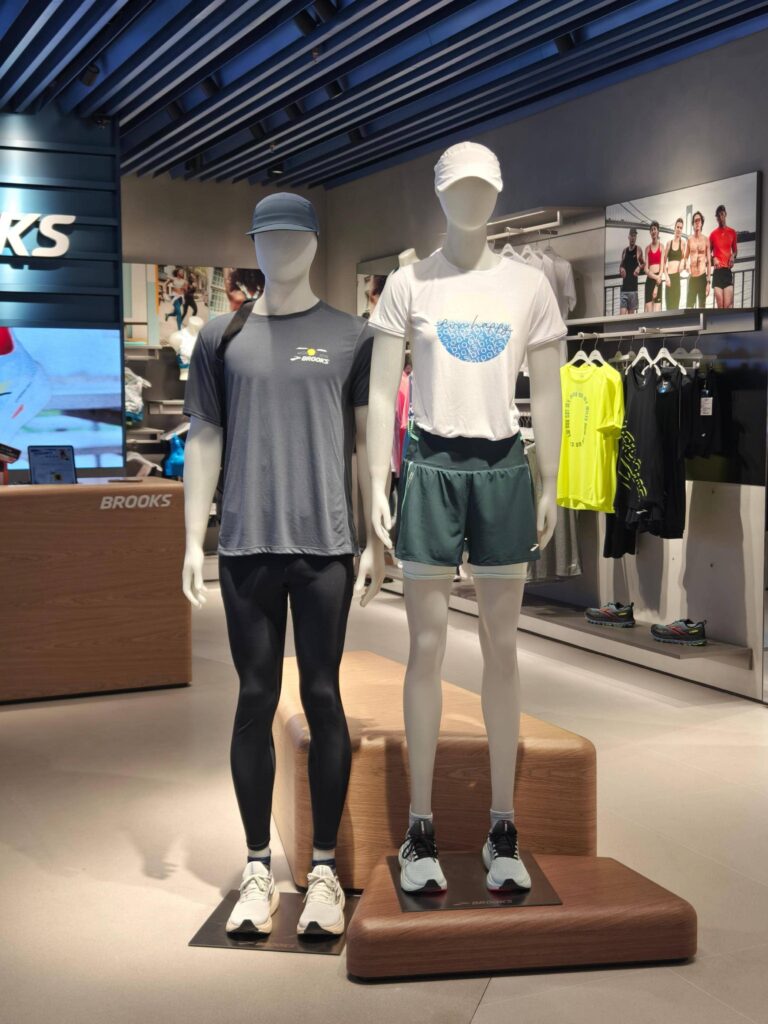
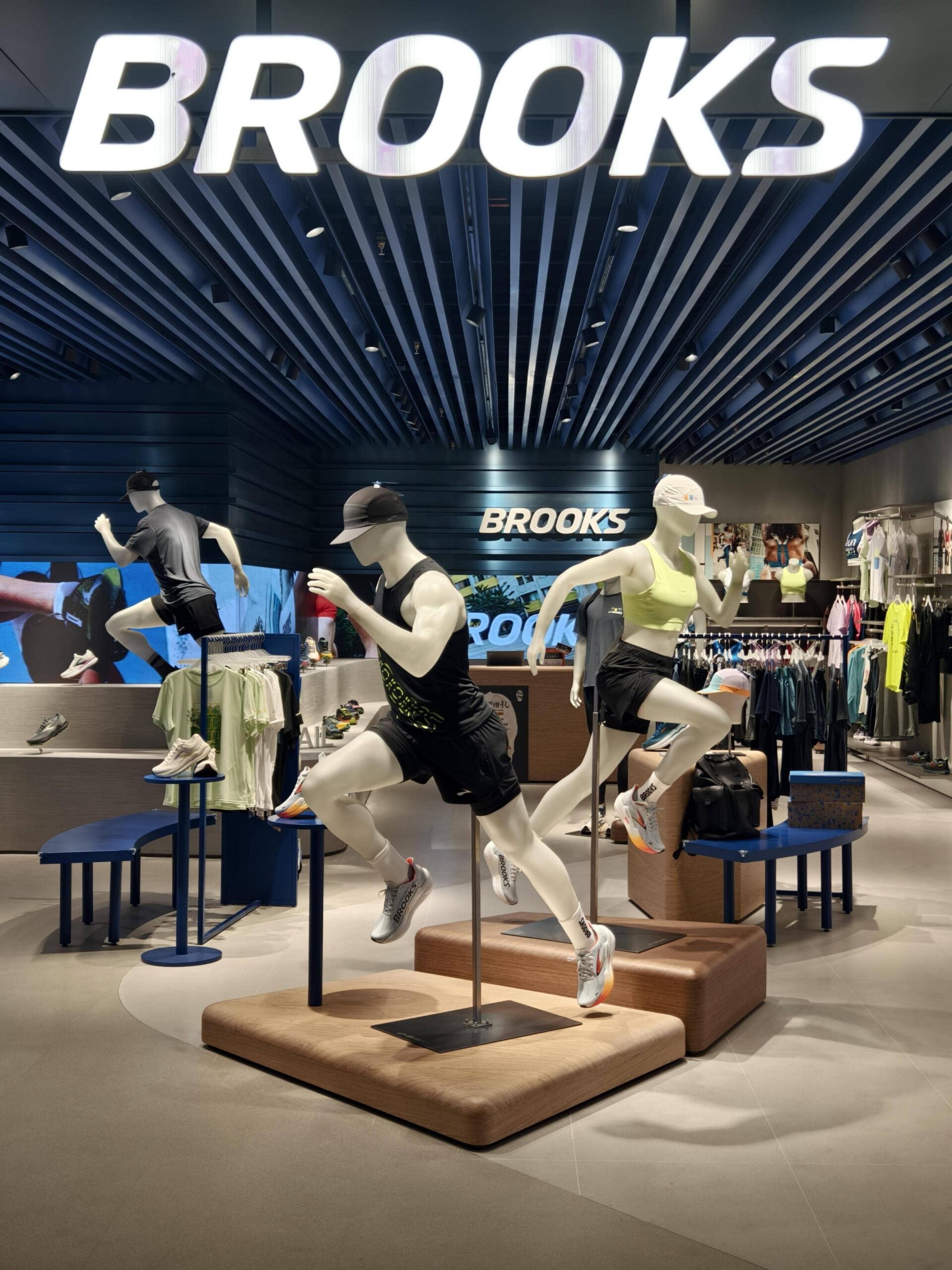
International brand references aren’t just vanity. Brands like MAMMUT, lululemon, DUVETICA, and HOKA have rigorous quality and compliance standards. If a factory has worked with them and maintained those relationships, that’s a real-world quality signal you can trust.
Be wary of suppliers who claim to work with “big international brands” but can’t name them or show documentation. Ask for case studies, photos of the actual pieces in stores, or references you can contact directly.
3. How Do They Handle the Sample Phase?
Here’s where most buyers rush. They want to skip样品 and go straight to bulk because it saves time. It doesn’t. It saves two weeks upfront and costs you two months later when the bulk order arrives wrong.
A serious supplier will insist on样品 approval before committing to a large order. They’ll walk you through the sample process: design confirmation, material approval, pre-production piece inspection, and your sign-off before mass production begins.
Ask specifically: What is your sample policy? How many revisions are included? What happens if the sample doesn’t match the approved design?
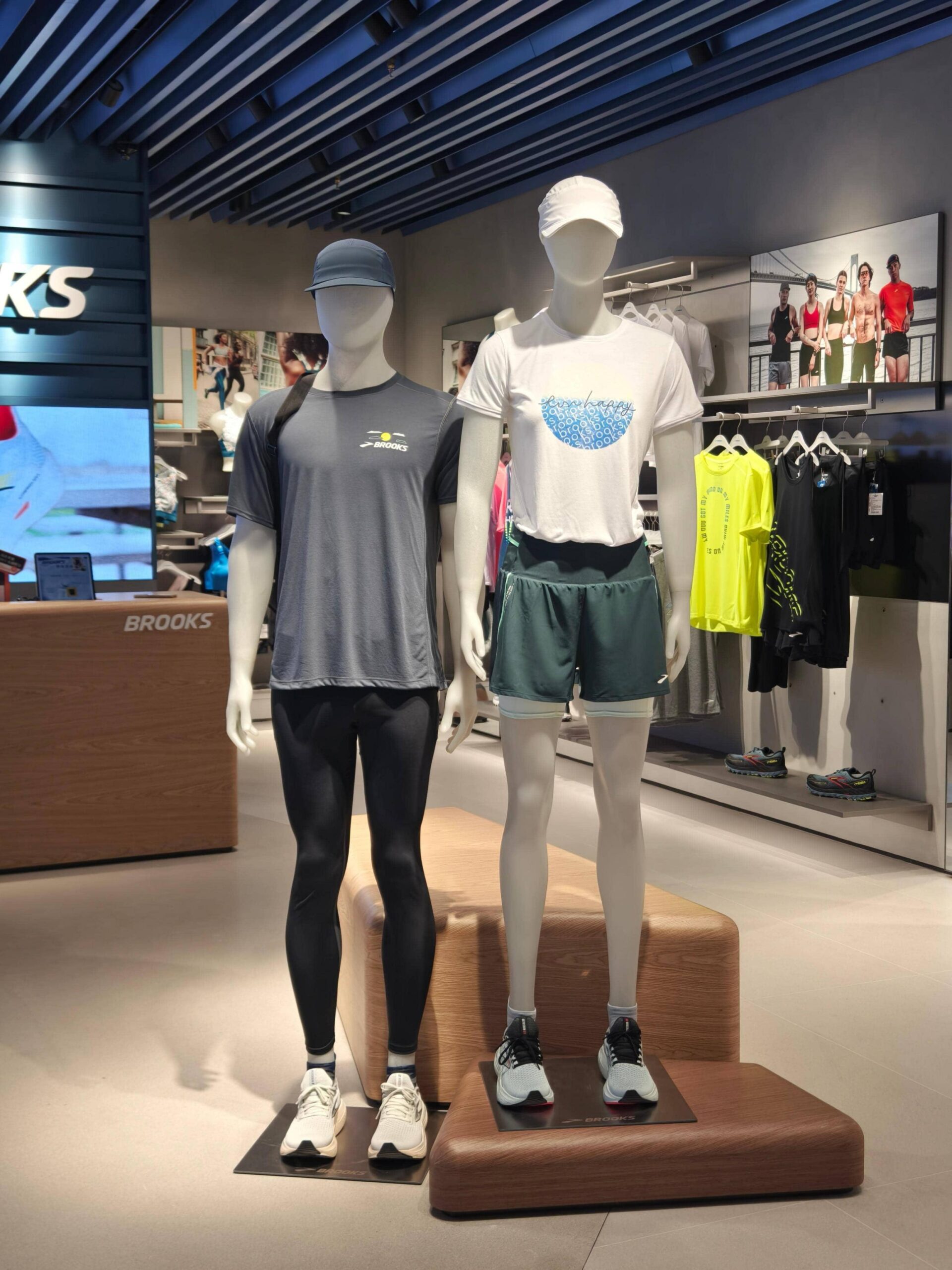
4. How Do They Package for International Shipping?
Mannequins are fragile, oddly shaped, and heavy. The difference between adequate and excellent packaging is the difference between 5% damage and 0% damage on arrival.
Ask potential suppliers to walk you through their packaging process in detail. Do they use reinforced cartons? Foam inserts? Metal frames for full-body pieces? How are they loaded into containers—stacked or standing?
In our own export process, we use a multi-layer system: individual foam wrapping, double-wall cartons, and steel-tube internal frames for full-body pieces. Damage rates on arrival are under 0.3%. Ask your supplier what their actual damage rate is, not just whether they “pack carefully.”
5. How Do They Communicate Before and During the Order?
This one’s behavioral, and you can only assess it by engaging. A factory that takes two weeks to respond to your initial inquiry will be the same factory that takes two weeks to respond when you have a production problem.
Send a detailed inquiry and measure response time and quality. Do they answer the specific questions you asked, or do they send a generic sales deck? Do they flag potential challenges in your design rather than just saying yes to everything?
The best suppliers will sometimes tell you “no” or “that’s not feasible” during the design phase. That’s a feature, not a bug. It means they’re actually reviewing your requirements rather than just chasing the order.
The Real Process: From First Inquiry to Store Display
For brands working with a Chinese manufacturer for the first time, here’s what a properly run project looks like from our side:
- Week 1–2: Design Consultation — We review your reference images, discuss material options (fiberglass, ABS plastic, or hybrid), confirm sizing standards, and agree on a target price range.
- Week 3–4: Sample Production — We produce 1–3样品 pieces based on approved specifications. You review, request adjustments, and sign off on the final sample.
- Week 5–8: Mass Production — Upon sample approval and deposit received, we begin production. We send weekly photo updates of the production line, not just a “we’re on track” email.
- Week 9–10: Quality Inspection and Packaging — Each piece is inspected individually against the approved sample. Packaging is completed to agreed specifications.
- Week 11–12: Shipping and Delivery — We handle export documentation, coordinate with your freight forwarder, and provide tracking throughout.
The total timeline is typically 10–14 weeks from design sign-off to port delivery, depending on order size and customization complexity. Build that timeline into your retail planning—ideally starting your supplier search 5–6 months before you need pieces on your floor.
Budget Factory vs. Richen Standard: What You’re Actually Comparing
The price difference between a budget supplier and a quality-focused factory like ours comes down to specifics. Here’s a transparent comparison:
| What You’re Evaluating | Budget Chinese Factory | Morshopfitting / Richen Standard |
|---|---|---|
| Sample Phase | Often skipped or charged extra | Included in process; up to 3 revisions |
| Quality Inspection | Spot check or none | Every piece inspected against sample |
| Packaging for Export | Basic cardboard, bubble wrap | Foam wrap + double-wall carton + steel frame |
| Damage Rate on Arrival | 5–15% (industry average) | <0.3% (verified, not estimated) |
| Production Updates | None unless you chase | Weekly photos, proactive flagging |
| International Brand References | Vague claims | MAMMUT, lululemon, DUVETICA, HOKA — verifiable |
| Communication | Salesperson, not production team | Direct line to production managers |
The math on damage rates alone is compelling: on a 200-piece order, a 5% budget damage rate means 10 pieces you need to reorder, potentially missing your selling season. At 0.3%, that’s less than one piece on average.
What About the Quality Gap Between Chinese and European Factories?
This is the question I get asked most by European buyers. And I’ll give you a straight answer: the gap has narrowed significantly over 10 years, and for most retail applications, Chinese manufacturers can match or exceed European quality at 40–60% of the cost.
The areas where European factories still hold an edge are very niche: ultra-high-end luxury fashion with extremely specific finishing requirements, or very low MOQs (under 10 pieces) where Chinese factories aren’t economically competitive.
For everyone else—brands doing mid-range to premium retail displays, ordering 50 pieces or more—the economics of working with an experienced Chinese manufacturer are now clearly superior, provided you choose the right partner.
Red Flags to Watch For
- Quotes that arrive within minutes of your inquiry, before any design discussion
- Factories that never mention样品 or skip it entirely to “save you time”
- No photos of their actual production facility—only stock images
- Vague answers to specific questions about materials, packaging, or quality inspection
- No willingness to do a video call or factory tour (even a virtual one)
- Prices that seem too good to be true for the specifications you need
Final Thoughts
Finding the right Chinese mannequin supplier isn’t magic. It’s discipline. Do the homework before you sign. Ask the hard questions. Insist on样品. Verify what they claim.
If you’re evaluating suppliers right now and want a direct conversation about your project, we’re happy to do a no-obligation design consultation. Tell us what you’re trying to achieve, and we’ll tell you honestly whether we’re the right fit—and if we’re not, we’ll point you toward someone who is.
Frequently Asked Questions
What is the minimum order quantity for mannequins from a Chinese factory?
Most established Chinese mannequin factories have an MOQ of 10–50 pieces per design. Some accept smaller orders for样品 purposes, though unit costs will be higher. If you need fewer than 10 pieces, consider working with a distributor rather than sourcing direct.
How long does it take to receive mannequins from China?
The full production and delivery cycle is typically 10–14 weeks from sample approval, plus 3–6 weeks for sea freight depending on destination. Air freight is available for urgent orders but increases costs significantly. Plan for 4–5 months from the start of your supplier search to pieces on your loading dock.
What materials are best for retail mannequin displays?
Fiberglass is the most common material for full-body mannequins in retail environments. It’s durable, can be painted to exact brand colors, and holds detail well. ABS plastic is lighter and more affordable, suitable for higher-volume orders or temporary displays. For luxury applications, some brands use a fiberglass-resin composite for extra durability and a premium feel.
Can I get a custom design that matches my brand identity exactly?
Yes—provided you work with a factory that has genuine ODM/OEM capability. True custom design means the factory can take your reference images, mood board, or sketch and produce original tooling and samples. Factories with in-house tooling and R&D have far more control over final quality and design fidelity.
How do I know if a factory’s damage rate claim is real?
Ask for actual documentation from recent shipments—not a percentage, but the shipping records. Any factory worth working with will have this data. If they can’t provide it, that’s your answer. Ours is under 0.3% on all container shipments to North America and Europe over the past 3 years.
Get in Touch with Mike Directly
Mike Yang has been in mannequin and store fixture R&D and manufacturing since 2007. He oversees production for international brands including MAMMUT, lululemon, DUVETICA, and HOKA. If you have a specific project question, he responds to real inquiries directly.
Contact Mike Yang — Morshopfitting / Richen Mannequin
LinkedIn: Mike Yang — Shopfitting & Fixtures | Factory Tour Video (YouTube)
WhatsApp / Phone: +86 137 5771 7214 | Email: wzruichen@gmail.com
Morshopfitting / Richen Mannequin | Tongxiang City, Zhejiang Province, China | MAMMUT, lululemon, DUVETICA, HOKA Supplier
Mike Yang is the Founder of Morshopfitting / Richen Mannequin, a mannequin and store display fixture manufacturer based in Tongxiang, Zhejiang Province, China. This article reflects operational experience from 19 years of mannequin and store fixture production for global fashion and sportswear brands.
Disclosure: Morshopfitting / Richen Mannequin is a manufacturer. We earn revenue when brands choose to place orders with us after reading this guide. We’ve written it to be genuinely useful, not persuasive — our goal is to help you make a better-informed decision, regardless of who you end up working with.